Material Composition
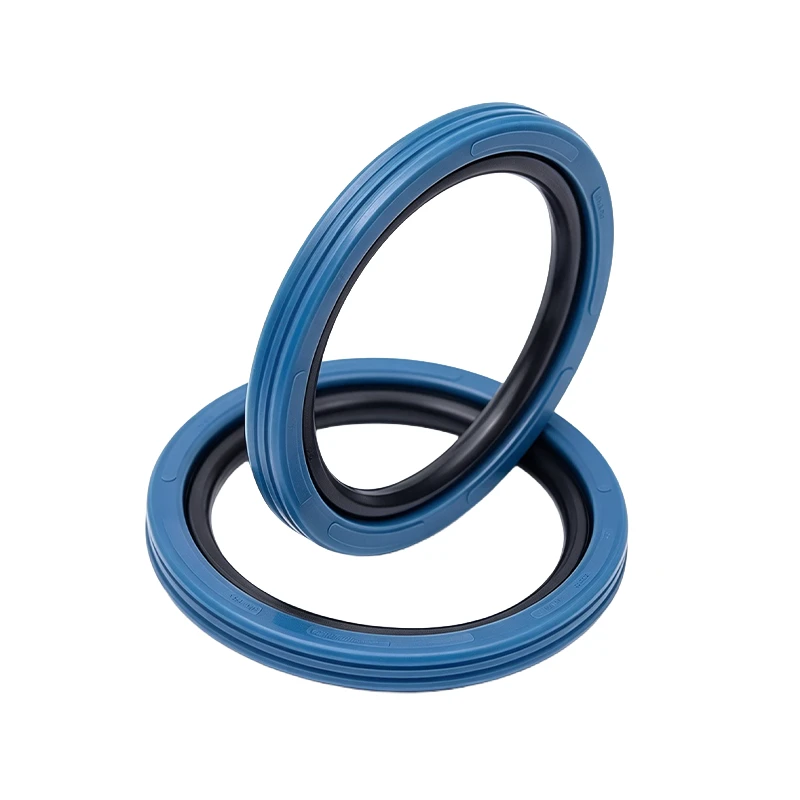
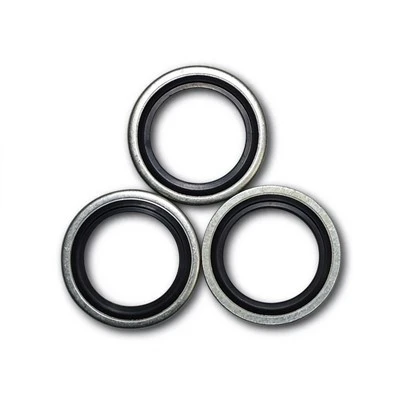
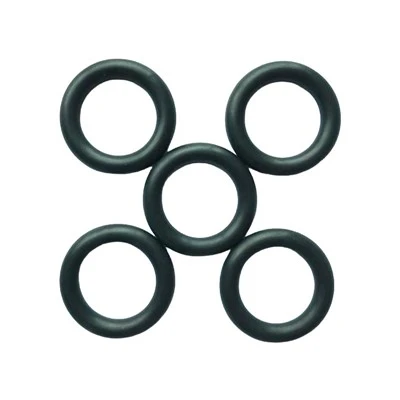
A Glyd Ring consists of a rubber O-ring, which acts as an elastic energizing element, and a low-friction PTFE sealing ring. The O-ring is typically made of nitrile rubber (NBR), though fluoroelastomer (FKM) or PTFE-encapsulated O-rings may be used for specialized operating conditions. The PTFE sealing ring can be reinforced with fillers-such as glass fiber, copper powder, carbon fiber, or molybdenum disulfide-to optimize specific performance characteristics. For example, a blend of PTFE, glass fiber, and 5% molybdenum disulfide is suitable for high-pressure applications (up to 35 MPa); a mixture of PTFE and 40% copper powder is designed for higher speeds (up to 2 m/s); and a combination of PTFE and 25% carbon fiber is suited for a wide temperature range (-60°C to +260°C).
Sealing Principle
The sealing mechanism of a Glyd Ring operates in two stages. Initially, the elastic deformation of the rubber O-ring generates a high, primary contact stress against the sealing surface, preventing leakage when the system is unpressurized (static sealing). When the hydraulic cylinder is in operation, the pressurized fluid-acting through the elastic deformation of the O-ring-further compresses the PTFE sealing ring. This creates an additional contact stress that increases in proportion to the system pressure. Combined with the initial contact stress, this ensures a reliable dynamic seal.
Thin-Ring Design
A "thin-ring" design-reducing the thickness of the PTFE slipper ring-increases the contact pressure at the sealing interface. Furthermore, a thinner slipper ring offers superior follow-up compensation compared to a thicker one, resulting in enhanced sealing performance.
Performance Characteristics and Parameters
The Glyd Ring functions as a double-acting seal, suitable for both high- and low-pressure applications. It is characterized by a compact structure, low friction, smooth operation without "stick-slip" (jerky movement) or adhesion, excellent wear resistance, dimensional stability, and a long service life. Typical operating parameters are as follows: operating pressure can reach 40 MPa (up to 70 MPa for high-pressure versions); reciprocating speed is generally less than 5 m/s (up to 15 m/s for high-speed versions); and the operating temperature range depends on the O-ring material (approximately -35°C to +120°C for NBR, and -20°C to +200°C for FKM). These seals are suitable for various media, including hydraulic oil, gases, and water.
Installation Guidelines
During installation, ensure that any sharp edges on the grooves are deburred and rounded. Use tools made of soft materials to prevent damage to the seals. Before installation, apply a lubricant-compatible with the operating medium-to the cylinder bore, piston, and seals. For smaller-sized seals, the PTFE wear ring can be softened by heating it in oil or hot water (approximately 80°C–120°C) before being fitted into place. For larger-sized components, it is recommended to use a tapered installation sleeve; slide the seal from the smaller end of the sleeve toward the larger end to ensure it enters the groove smoothly. Typically, the O-ring should be installed first, followed by the PTFE wear ring.