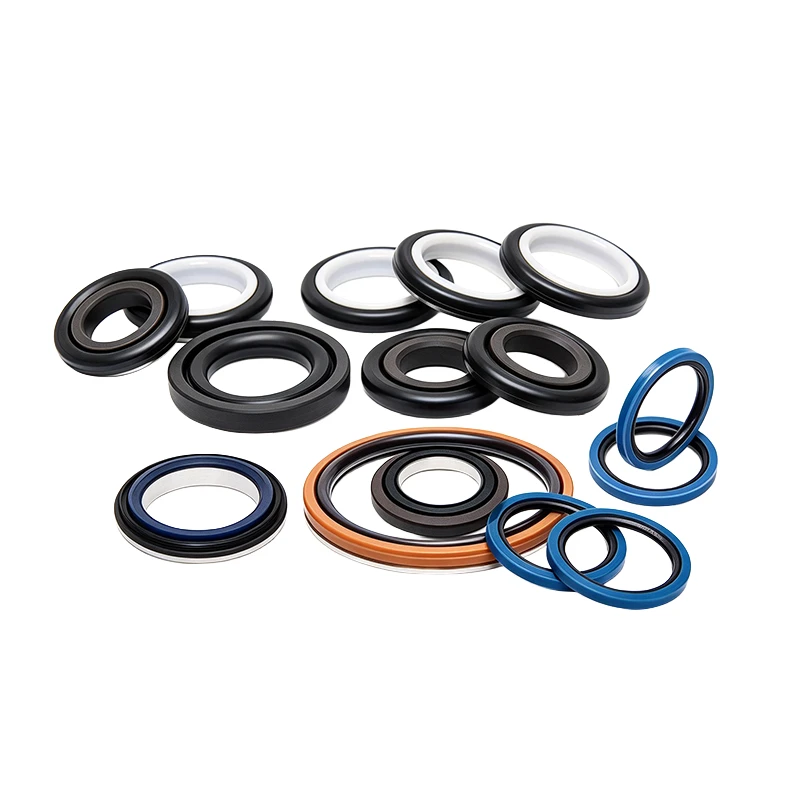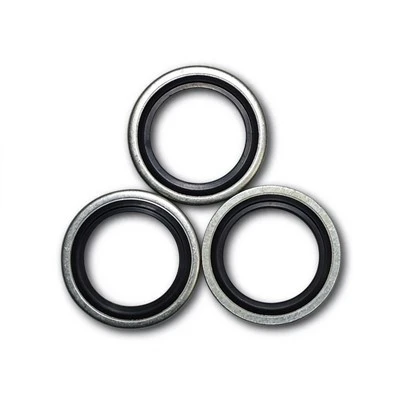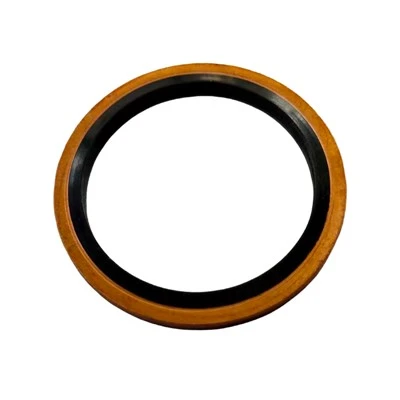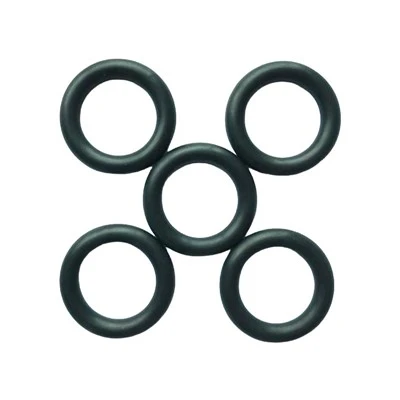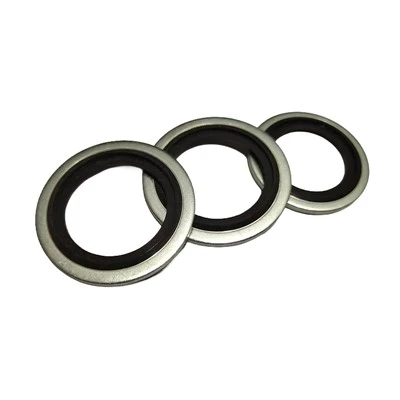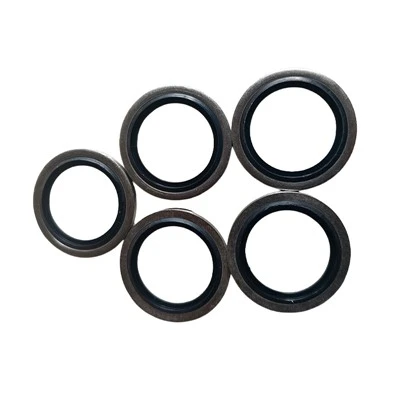
The key technology of a Glyd ring lies in its composite structural design and material properties. It utilizes a rubber O-ring to provide elastic preload, while a polytetrafluoroethylene (PTFE) ring serves as a low-friction, wear-resistant element; together, they achieve bidirectional sealing. The technical performance parameters of these components determine their application range and reliability.
Regarding operating pressure, Glyd rings designed for reciprocating motion can withstand pressures up to 70 MPa. For models intended for rotary or oscillating motion, the operating pressure is generally lower: typically ≤30 MPa at a linear velocity of 1 m/s, and ≤20 MPa at 2 m/s. In terms of operating speed, they can handle reciprocating speeds of up to 15 m/s, while for rotary motion, the linear velocity can reach up to 5 m/s. The applicable temperature range is primarily determined by the material of the O-ring, typically spanning from -60°C to +260°C (e.g., when using a PTFE-carbon fiber composite paired with an appropriate O-ring); for rotary applications, the typical operating temperature range is -45°C to +200°C.
Glyd rings are compatible with a wide range of media, including petroleum-based hydraulic fluids, fire-resistant fluids, environmentally friendly/safe fluids (such as bio-oils), water, and air. They impose specific requirements on the sealing surfaces: the surface roughness (Ra) of the piston rod must be ≤0.2 µm, and the surface roughness (Ra) at the bottom of the groove must be ≤1.6 µm.
Glyd rings offer several technical advantages, including low friction, the absence of "stick-slip" (jerky movement) during startup, smooth operation, high-pressure resistance, wear resistance, excellent dimensional stability, and low sensitivity to contamination.