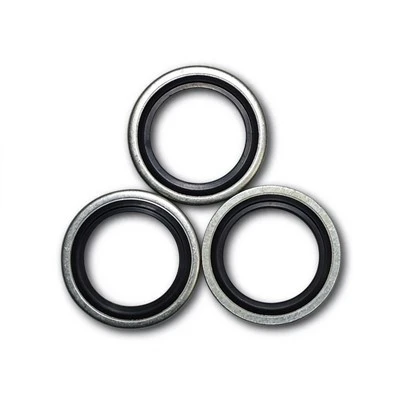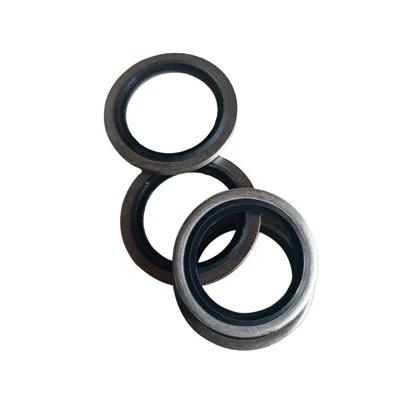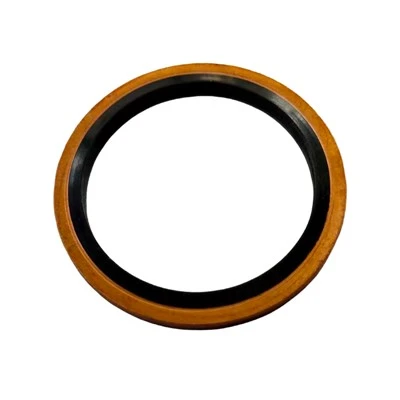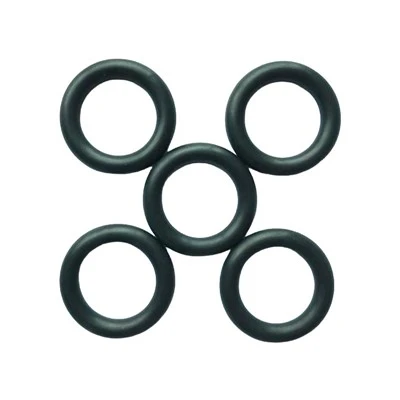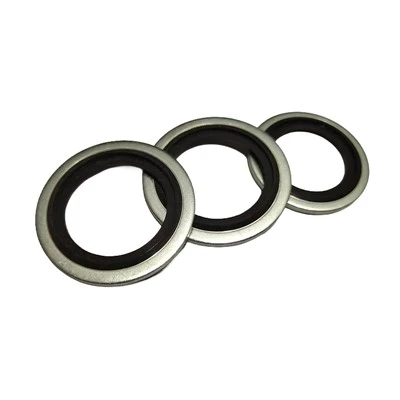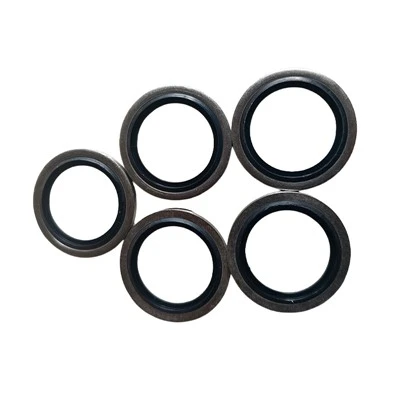
The cross-sectional shape of a gasket is closely linked to its sealing mechanism. Flat gaskets rely on surface-to-surface contact, necessitating high standards for the parallelism and surface roughness of the flange faces. O-rings generate contact pressure when compressed within a groove; higher pressure increases the tendency for the O-ring to be pushed toward the downstream side, enhancing its "self-energizing" effect-provided that the groove dimensions and compression ratio are correctly specified. Composite gaskets consist of a rubber element paired with a metal retaining ring; the metal ring prevents the rubber from extruding into the gap under high pressure, while the rubber component provides elastic contact. Lip-type seals utilize system pressure to force the lip to expand and press firmly against the mating surface-the higher the pressure, the tighter the seal. Since different cross-sectional shapes employ distinct strategies to block leakage paths, selection must account for pressure ratings, gap dimensions, and available installation space.
The installation process often has a greater impact on a gasket's actual performance than the material itself. If bolts are tightened sequentially from one end, the flange may warp, causing the gap on the opposite side to widen. The correct approach is to use a cross-pattern, multi-stage tightening sequence, which ensures that the pressure applied to the gasket becomes uniform. Furthermore, torque values should be determined based on the recommended compression for the specific gasket material, rather than simply aiming for the highest possible torque.